The first thing I do on every project isn’t on screen
People assume my creative process starts the moment I open a new file. A blank canvas, a brief in front of me, straight into colours and fonts. That’s not actually where it starts for me.
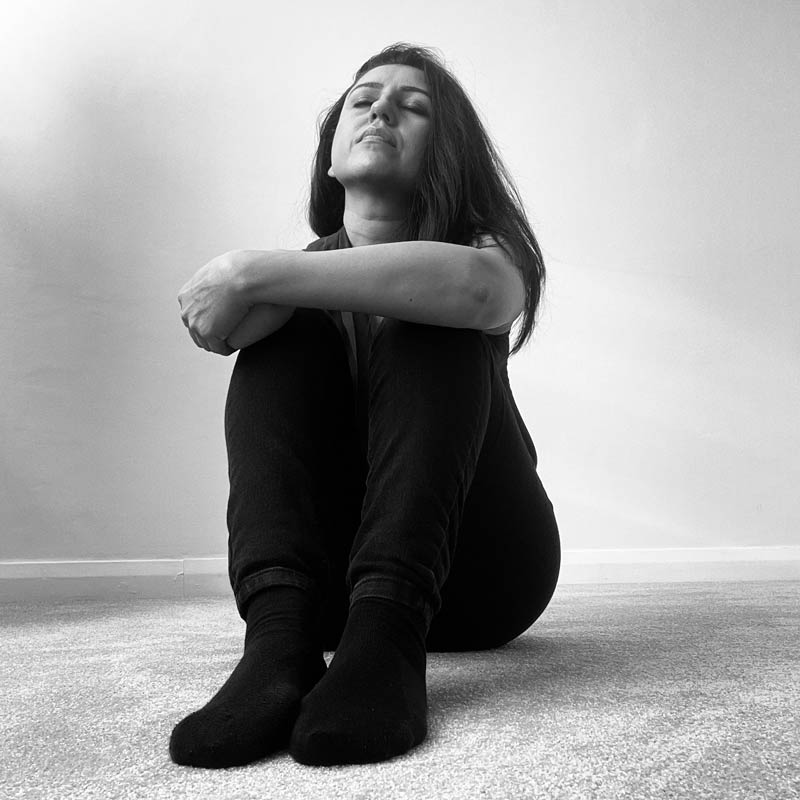
Before I touch anything, I meditate.
Not for an hour. Not in some elaborate ritual. Just enough quiet to clear whatever was in my head from the last project before I let the next one in. It sounds like a small thing, but it’s probably the most important ten minutes of every brief I take on.
Here’s why it matters. Every project I work on deserves fresh energy. If I go straight from finishing one client’s website into starting another client’s marketing, I’m not really showing up for either of them properly. The ideas, the colours, the feelings from the last project are still sitting in my head somewhere, getting in the way without me even realising it. So I clear it. No overlap. No creative noise carried over. Just space for whatever I’m working on next.
This is also why I don’t take unplanned calls when I’m actively working on a project. I know that might sound unusual, but a phone call in the middle of deep creative work doesn’t just interrupt it for the length of the call, it can take an hour or more to get back to the same level of focus. Everything I’ve just described, the quiet, the fresh energy, the thinking space, gets undone in minutes. WhatsApp works much better for me, it lets me respond when I’m between tasks rather than mid-thought, and it means the work I’m doing for you stays at the level it needs to be.
Something else that shapes the work is time. I always tell clients when they can expect to see something from me, and that timeline is thought through, not guessed. It includes the thinking time this whole post is about. Creative work doesn’t get faster under pressure. The best ideas come when there’s room for them, so I’d always rather give you a realistic date and keep to it than rush something that isn’t right. That trust in the process, on both sides, is what produces the best result for you.
I think a lot of people assume good marketing and good design come from a sudden flash of inspiration. Sometimes it does. But more often it comes from giving yourself room to actually think, rather than reacting under pressure.
In this post
Why a rushed creative process always shows in the work
Some days the ideas come instantly. Other days nothing comes at all, and that’s fine too. What I’ve learned over twenty years of doing this is that forcing it never works. I’ve seen it happen time and again with businesses who come to me after working with someone else first, a campaign thrown together in an afternoon because a deadline was looming, with no real time to test whether it actually fits the business. A website built straight from the content they’ve supplied, without the time to actually sit with it and design the right layout for the specific content or question the content to see if it will engage the customers in the right way.
That’s not how I want to work, and it’s honestly not how I think anyone should be marketing their business.
If your marketing feels like it’s always reactive, always last minute, always thrown together “just to stay consistent,” it’s worth asking whether that’s actually a creativity problem. Most of the time it isn’t. It’s a planning problem. You can’t think clearly about your marketing when you’re scrambling to post something before the day ends.
This is part of why I built my marketing partnerships around planning ahead rather than chasing the next deadline. Every month starts with the thinking, not the doing. We work out what actually needs to be said and who it needs to reach before a single graphic gets designed. It’s a completely different way of working to the agencies who are juggling fifty clients and producing content on autopilot.
I read something a while ago about the idea of “deep work” versus “shallow work”, the theory that the best output rarely comes from constant busyness, it comes from protected, focused time. It stuck with me because it’s exactly what I’d already been doing instinctively for years without having a name for it. If you’re curious about the research behind it, Cal Newport’s work on deep work is worth a read.
The part AI can’t replicate
And I’ll be honest about something, because I think it needs saying. I do use AI as part of how I work now, for research, for a first pass at ideas, the same way I’d use any tool that makes the process better. But there’s a real difference between generating something and finishing it. Every piece of content I create, I think about the feeling it needs to create, the person it needs to reach, the connection it needs to make. I don’t just put a job together the way the brief asked for it. I’m always looking at where something could be pushed further, where a different choice of word or image or layout would land harder, get more engagement, create a deeper connection. That instinct is something no tool has, and it’s the part of my creative process that produces the work I’m proudest of.
It’s also why, when I set up AI for clients, I teach it their story and the way they speak first. So the first draft already sounds like them, and the finishing touches are still theirs.
I also think this is part of why my clients tend to stay for years rather than one project. When you know someone is actually thinking about your business rather than just producing for it, you trust them with more. You stop doubting everything. You hand it over, confident their experience and knowledge will get you where you actually want to be.
What this means for your project
So if you ever wonder what happens before I start your project, this is it. A bit of quiet. A clear head. Space to actually think about what your business needs rather than what’s quickest to deliver. It’s not glamorous and nobody sees it happen, but it’s the part of the creative process that the whole project depends on. You can read more about how I work with clients on my About page.
If you want to see what comes out the other side of that process, you can take a look at recent projects I’ve delivered this way.